Showing posts with label quirky. Show all posts
Showing posts with label quirky. Show all posts
Tuesday, October 31, 2006


Thursday, May 25, 2006
Guess What?

Andy Marshall is a professional architectural photographer. Most images can be downloaded 24/7 at Alamy
More about Andy Marshall
Contact Andy Marshall
Search all of Andy Marshall's Images
All images are copyright Andy Marshall and must not be used without prior permission.
Thursday, May 18, 2006
Conceptual Images
 I'm not just an architecture junkie - I also enjoy producing conceptual images which have a theme or meaning to illustrate an article or editorial.
You can view more of my conceptual images here
Andy Marshall is a professional architectural photographer. Most images can be downloaded 24/7 at Alamy
More about Andy Marshall
Contact Andy Marshall
Search all of Andy Marshall's Images
All images are copyright Andy Marshall and must not be used without prior permission.
Thursday, April 20, 2006
Frozen Hands
 This image is the subject of my latest sale to a magazine in Eastern Europe.
You can purchase this image here
You can view all of my conceptual images here
Thursday, March 09, 2006
Holy Cow!
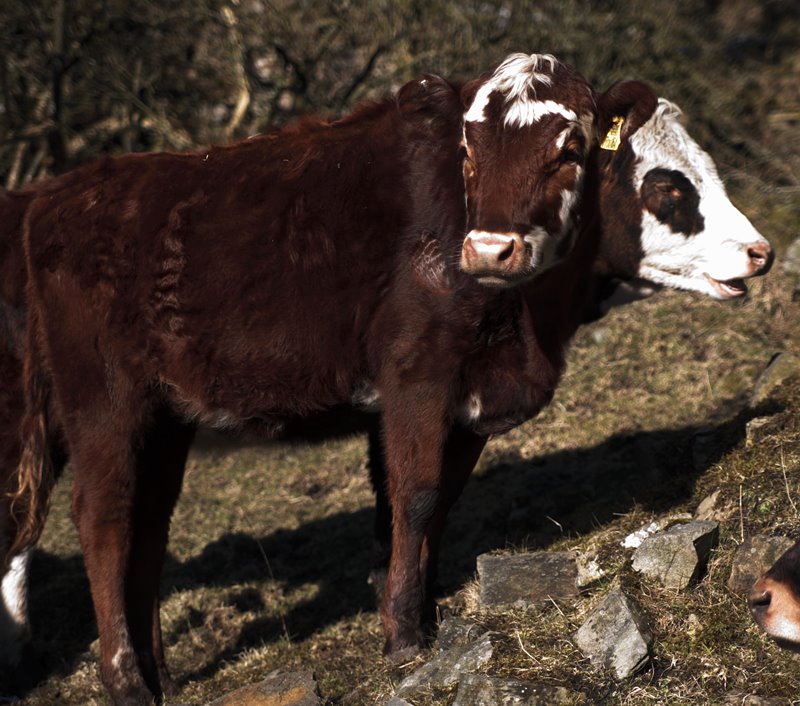 I came across this bovine beauty during a walk through the Cheesden Valley - is it really a two headed specimen or something in disguise? More here at my photoblog.....
Wednesday, February 22, 2006
Jessica
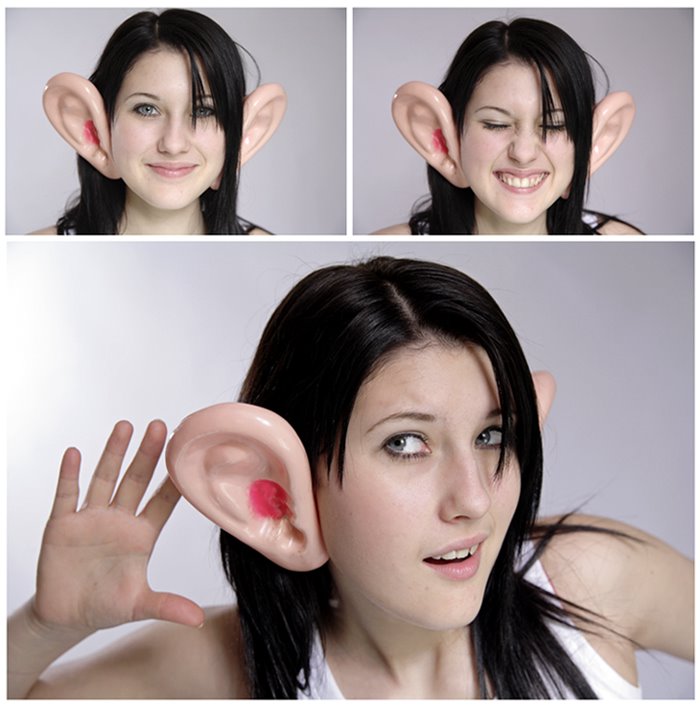 Every now and then its refreshing to photograph something different than finials and fenestration. I did a studio shoot with Jessica over the weekend - who was all ears;)
Here's a whole swatch of my studio and people images
Friday, February 03, 2006
The City Reflected
 Aswell as my architectural photography, I also produce composite images which are intertwined with urban themes which have a more conceptual angle. Click the image to enlarge it.
Here's a whole raft of my conceptual images
Monday, January 02, 2006
Gruesome Find
 Another trip into Cheesden today and found the carcass of a deer at the back of Washwheel Mill. I didn't know we had deer in the Cheesden Valley.
The light was dull and morbid today much in keeping with my gruesome find, but the day nevertheless was invigorating. I spent much time taking photo's of parts of the industrial remains of a site called Deeply Vale. There was no sun, so I took photo's of parts that the sun never reaches - like under the packhorse bridge which leads onto the damhead of the lodge.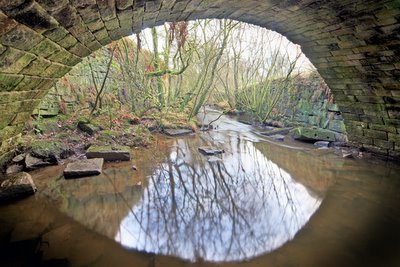
Getting into the Cheesden Valley isn't easy. Take the Elbut Lane and you have to walk around a mile uphill and then take a steep traverse into the valley before getting close to the first mill. I like this reverential space around the valley - it keeps it special. It reminds me of the Greek and Roman classical temples which have a hierarchy of space which imbues them with mystique and spirituality. The valley is just like this and I can't wait to get back there as soon as possible.
Wednesday, December 14, 2005
My Dad met Abraham Lincoln!

I was told an unlikely story by my Dad last night about when he came face to face with President Abe Lincoln himself. Before you ask, he's not old enough to remember the American Civil War, but he is old enough to have uncovered a controversial statue of the very man himself in Rusholme near Manchester several years ago. Working for the Corporation then, he came across poor old Abe lying prostrate on the floor covered in sheeting. Dad took a peek and saw that renowned wily gaze. The statue must have been placed there after being located in Platt Fields. Later it was moved to what is now known as Lincoln Square in Manchester.
This particular statue is pretty controversial. It was intended to be placed in Parliament Square London, but apparently the Presidents son Barnard thought it simply awful. It was known as the stomach ache statue because of the positioning of the hands. Eventually the statue by Saint Gaudens was used in London and subsequently my dad got the pleasure to meet Mr George Gray Barnard's creation, stomache ache and all.
Wednesday, November 09, 2005
Regenerate
 Here in the UK it is just possible that we might be about to commit the same mistakes as we did in the 1960's when we bulldozed our way through large swathes of Victorian architectural heritage.
Apparently tens of thousands of 'terraced' properties are under threat, especially in the North of England - the traditional bastion of the terraced house. As was the case last century, many communities that are held together by the warp and weft of the terraced street are facing social dilution.
It is all too easy to provide a no-brainer solution such as demolition, especially when there is the golden ticket of prime real estate. The real cost of such a solution may be the continued fragmentation of our localities.
After all it isn't just about the terraced house - is it?
The proportion and scale of a group of C19th terraces; the stylistic expression and hierarchical use of the doors and windows; the meaning and use of name plaques; the messages contained within the group pattern - all can contribute to social cohesion.
Current legislative guidance for England notes that identity is an important factor. Planning Policy Guidance 15, (Planning and the Historic Environment 1994) notes that ' The physical survivals of our past are to be valued and protected for their own sake, as a central part of our cultural heritage and a sense of our national identity'. 
The feeling one has whilst walking through the terraced houses of the north of England is obviously different than walking around, lets say, Cantebury Cathedral. Nevertheless, there is a feeling; especially for the families within the tight network of streets who were rooted into the community by the proportional and spatial dynamics which led to such symbolic and domain charged acts as donkey stoning the front door step. The sight of the worn curve of a doorstep for ex-residentials going back to such a place might bring about emotions just as powerful as those experienced with that of high architecture. Communities grow and evolve, and by a process of osmosis the built form interacts with such communities helping shape and create identity.
The Burra Charter (adopted by the Australian National Committee of ICOMOS) introduces the idea of 'cultural significance'. It talks about the importance of 'less tangible aspects of cultural significance including those embodied in the use of heritage places, associations with a place and the meanings that places have for people.'
If this is the case then the North of England is about to lose much of its cultural and social identity.
All images by Andy Marshall
Friday, November 04, 2005
Kings Lawn
 King's College Chapel Cambridge is one of the most remarkable and dramatic interiors (and exteriors) in the UK. I just keep going back to it over and over again. This shot of the King's College Grounds with the tudor gothic pinnacles goalposting the lawnmower man was taken from the tower of Saint Mary's Church.
Many visitors miss one of the most important parts of the building. Take a look at the wooden stalls and chancel screen and you will see one of the earliest examples of the English Renaissance.
You can read more about the screen here
Wednesday, November 02, 2005
In the doghouse
 This is a composite image of me (I couldn't get anybody else to model for this one!) in the proverbial... The image is a mixture of 3d imagery composed on Carrerra and finished in Photoshop. The photo of me is a standard stock shot taken in a studio. The original is here
In Photoshop, it took about 8 layers including background, house, me, shadow, reflection, adjustment layers.
The image took around 8 hours to produce including studio time.
It has been used in magazine and newspaper articles about relationships (surprisingly enough).
Subscribe to:
Posts (Atom)
ARCHI-SEARCH

Custom Search


